Implant Dentistry
Dental Implants
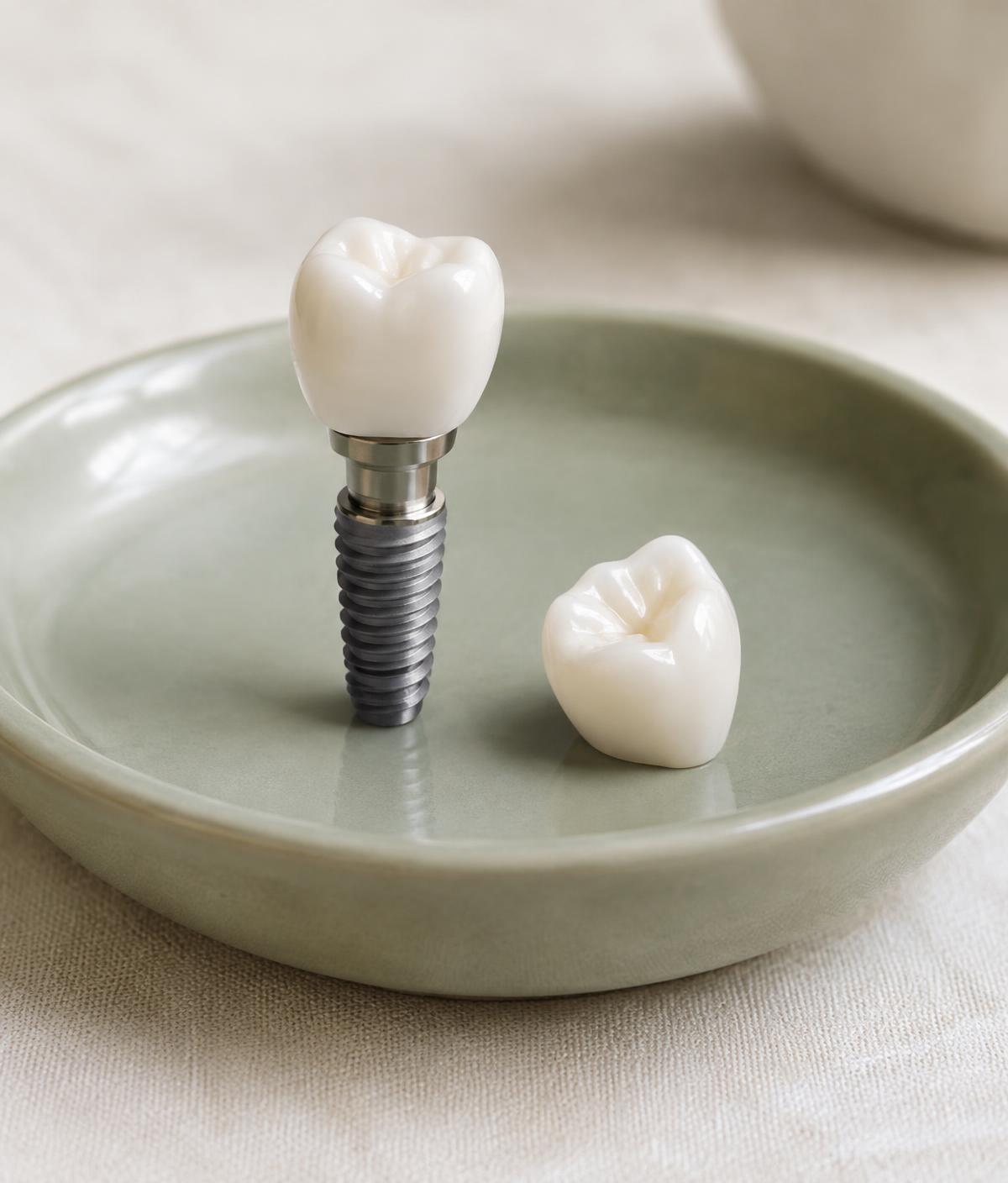
A dental implant replaces both the root and the visible part of a missing tooth. Careful planning helps determine whether implants are a suitable option for you.
- What it is
- A small titanium post placed in the jawbone that later supports a crown, bridge or denture.
- When it may be considered
- One or more missing teeth, where bone and general health are suitable.
- What consultation involves
- Examination, imaging to assess bone, and a discussion of alternatives such as bridges.
- What to expect
- A staged process over several months to allow healing before the final tooth is fitted.
Who May Benefit
Is dental implants relevant to you?
- Adults with a single missing tooth
- Patients with several missing teeth seeking a fixed option
- Denture wearers interested in improved stability
- People who prefer not to prepare neighbouring teeth for a bridge
This information is general and educational. Only an examination can determine whether a treatment is appropriate for you.
Treatment Overview
What the treatment involves.
Implant treatment begins with planning. Imaging helps us assess bone volume and the position of nearby structures, so the implant can be placed in an appropriate position.
The implant is placed under local anaesthesia and left to integrate with the bone over a healing period. Once stable, an abutment and custom crown are attached, designed to match the shape and shade of your surrounding teeth.
Treatment Journey
Step by step.
- 01
Consultation
We discuss your concerns, history and expectations.
- 02
Examination
A clinical assessment, with imaging where appropriate.
- 03
Treatment Planning
Options, timelines and costs explained clearly.
- 04
Procedure
Treatment carried out calmly, with each step explained.
- 05
Follow-Up
Review appointments and aftercare guidance.
Clinical Approach
Technology & process
Digital scanning and radiographic assessment support treatment planning. Each stage is reviewed with you before moving forward.
What to Expect
Realistic expectations
- Some swelling and tenderness for a few days after placement
- A soft diet may be advised during early healing
- Regular reviews to monitor healing before the final crown
Aftercare
Recovery & care
- Keep the area clean as instructed, using gentle brushing and rinses
- Avoid smoking, which can affect healing
- Attend routine check-ups and cleanings to support long-term implant health
General guidance only — follow the specific advice given at your appointment.
FAQ
Dental Implants questions.
Suitability depends on bone, gum health and general health. A consultation and imaging are needed to assess this.
Commonly a few months from placement to final crown, depending on healing and whether additional procedures are needed.
It is performed under local anaesthesia. Mild discomfort afterwards is usually manageable.
Implants do not rely on neighbouring teeth for support; bridges can be quicker. We will discuss both with you.
Much like natural teeth — brushing, interdental cleaning and regular professional reviews.
Related Treatments
You may also want to explore.
Restorative Dentistry
Dental Crowns
Restorations that help protect weakened teeth or replace a missing tooth as part of a bridge.
Restorative Dentistry
Root Canal Treatment
Careful treatment of inflamed or infected tooth pulp, aimed at preserving the natural tooth.
Gum Care
Gum Care
Assessment and treatment of gum concerns, from bleeding gums to deeper cleaning.
Discuss dental implants with us.
Start with a consultation and get clear guidance about your dental care.